Three-star, four-star, boutique or five-star: the gap is not mainly a matter of style, but of what survives use. Two units that look alike may carry 0.4 mm or 2 mm edging, a roller runner or a full-extension runner with soft close. The markers below describe ranges seen in hotel work and are to be confirmed against supplier documentation. Here are the points that genuinely change, and how to turn them into parameters you can inspect before comparing proposals. These markers are there to frame the right questions, not to rank a supplier.
Tier shows first in the carcass
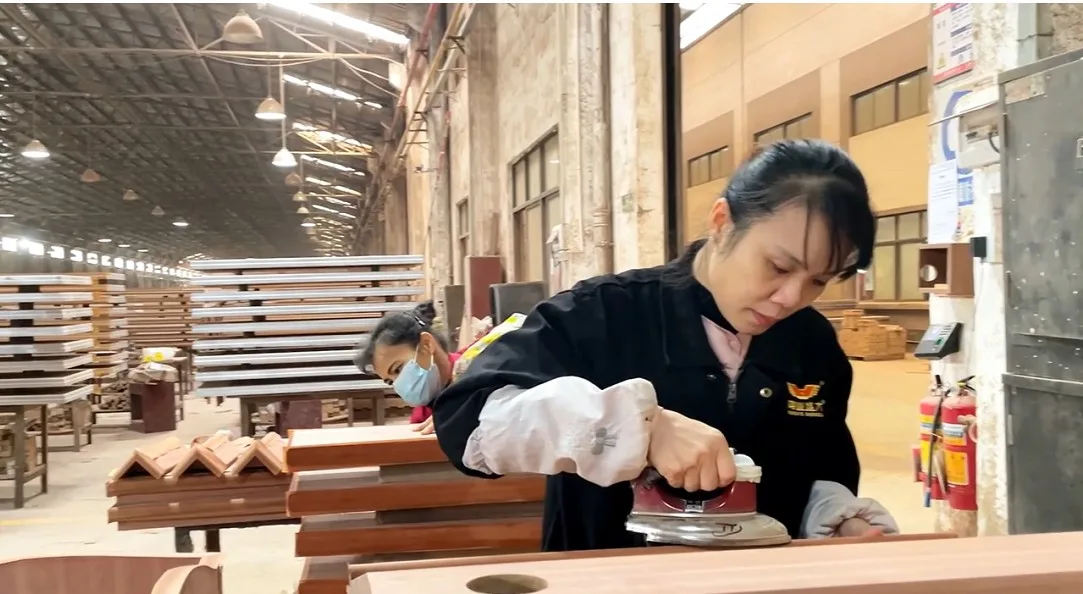
An entry-level unit often uses 16 mm particleboard with 0.4 to 0.8 mm applied edging. A higher tier moves to 18 or 19 mm board with 1.5 to 2 mm ABS edging, laid flat or flush. Band thickness matters as much as the adhesive: thin edging lifts at the first suitcase knock, and the repair shows. Behind the front, the runner decides the feel — roller, ball-bearing, then full extension with soft close. Ask for the rated load per pair, the travel and the cycle count tested. The back panel, often a thin stapled sheet, deserves the same scrutiny as the face, particularly when it carries drawers. Adjustable shelves on pins, rather than fixed battens, let a cabinet be reconfigured without tools, and that flexibility belongs in the brief. Fixings count too: wood screws in a soft board, cam fittings or inserts in a dense one. Specifying by brand name alone leaves the tier open to interpretation, so describe the assembly instead.
Fabrics, foam and removability
Abrasion resistance is read in Martindale rubs. A lightly used guestroom often holds between 20,000 and 25,000 rubs; a standard hotel room sits nearer 30,000 to 40,000; heavily used seating goes beyond 50,000. These figures are checked on the supplier's report, not on the label. Fire treatment and its classification are confirmed against the regulations of the destination country. A removable cover changes maintenance: closure type, fabric direction, washing behaviour and dimensional stability. For foam, 30 to 40 kg/m³ suits a back panel; a seat calls for a firmer density and a worked thickness, and the two should be specified separately. One spare cover per room type avoids taking a room out of service for a single stain, so state the washing regime you expect. Pile direction and shade are checked on a fitted cover, not on a sample lying flat. State whether covers are washed in-house or contracted out, because that changes the closure and the seam allowance.
The bed: frame, headboard and support
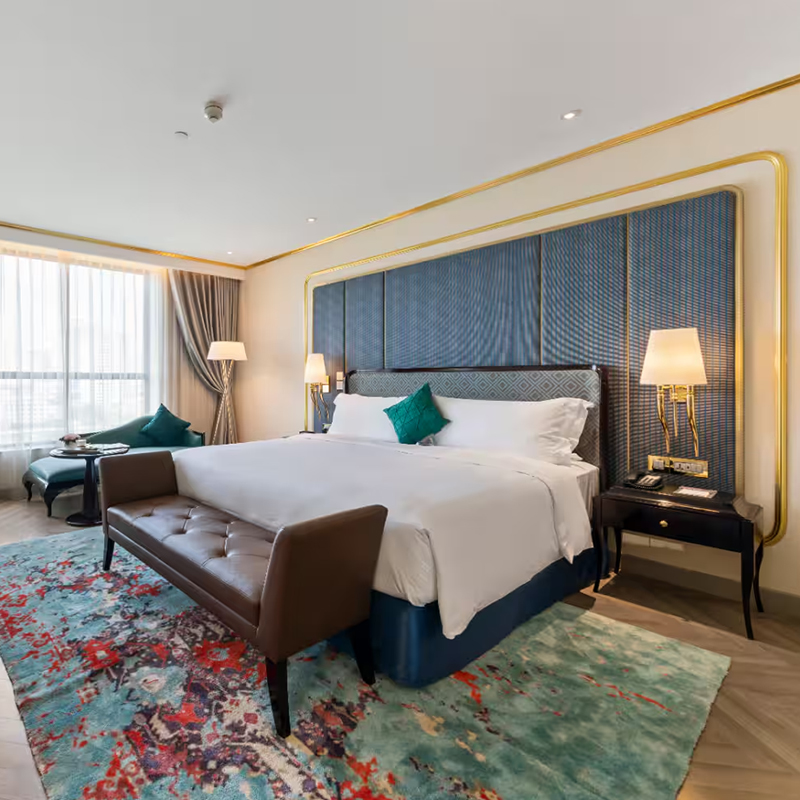
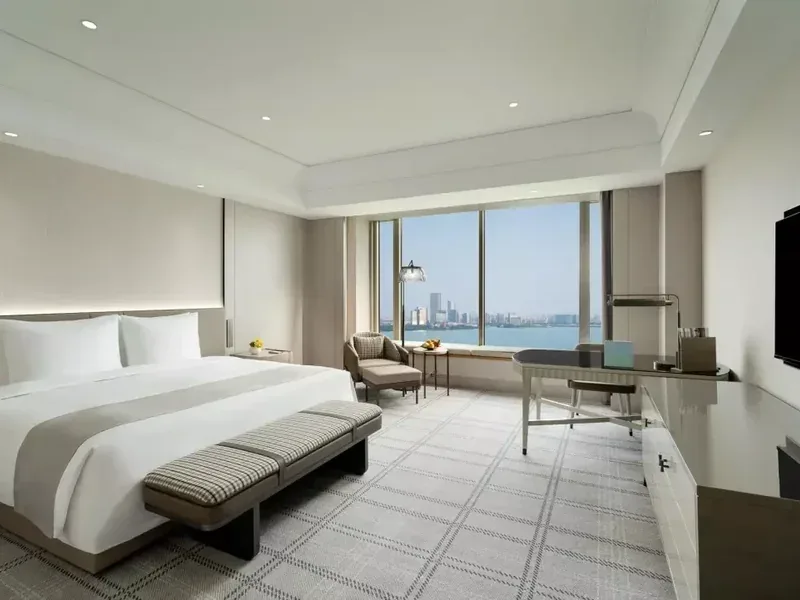
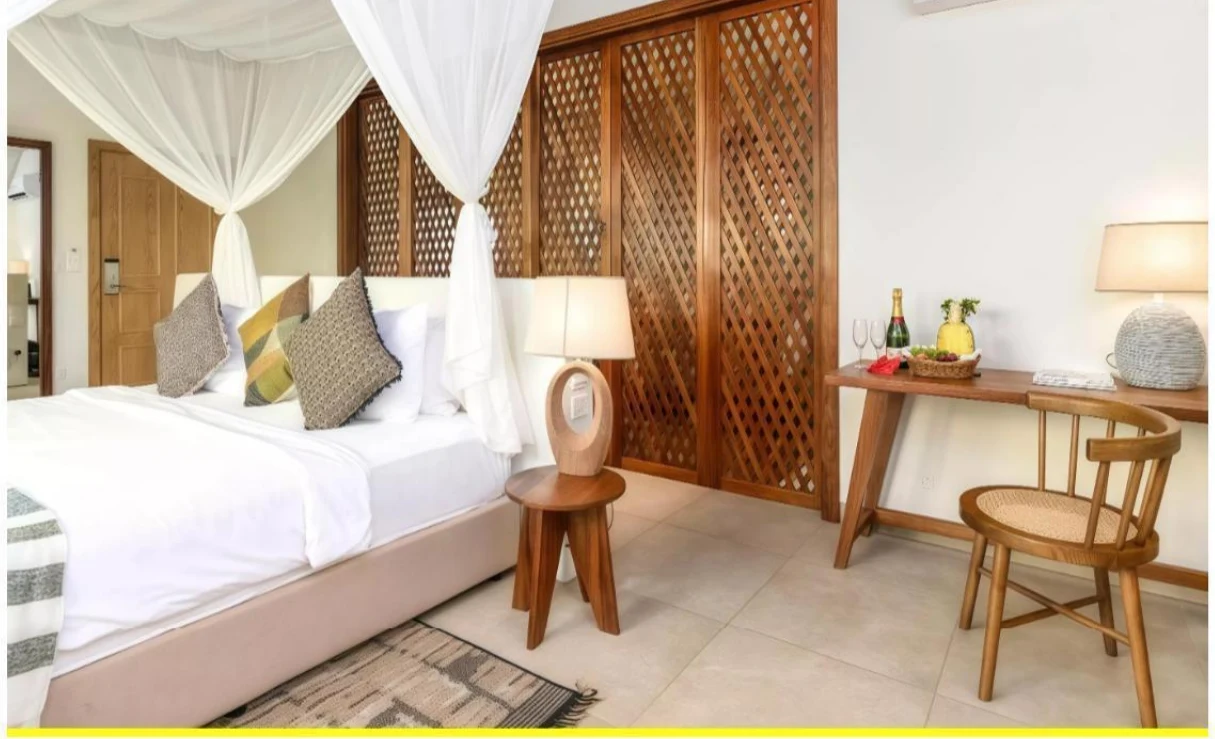
The bed concentrates the most expensive things to correct. A basic frame butts panels together; a higher tier uses solid wood or plywood legs, corner brackets, a central rail and adjustable feet. Beech or birch slats sit in holders that limit squeaking: their number and section matter more than their finish. Headboards fix in three ways — wall rail, integrated into the frame, or suspended — and a wall rail, which limits vibration, depends on the wall build-up. The mattress support, whether slats, a base or a platform, has to be described: it drives comfort and the replacement route later on. Headboard height follows the mattress top rather than the mood board: give it as a dimension from finished floor and check it against the bedside table. A close-slatted base and a sprung base are replaced differently once the floor is trading. Ask how the headboard is accessed for reupholstery without removing the bed.
Hardware, lighting and power points
Hardware decides how the room feels in use. A damped hinge with three-axis adjustment can be reset after settlement; a plain hinge only opens. Handles hold through bolted fixings or inserts: adhesive alone gives way. Mirrors integrate side or perimeter lighting, with colour temperature and colour rendering stated, and the ingress protection rating matters in the bathroom. On the electrical side, a guestroom needs sockets at the bedside, USB-A and USB-C ports, and a free point for a charger. These details weigh little at design stage and a great deal to add later, once the walls are closed. A cable route cut at machining stage avoids drilling on site and the making good that follows, so show it on the furniture drawing. Door buffers and drawer bumpers cut noise, which matters along a corridor at night. Bedside controls should be reachable from the pillow without stretching.
Storage, maintenance and the specification
Storage is drawn from use: rail height, number of adjustable shelves, internal drawers, wardrobe lighting, space for a suitcase and for a safe. A luggage rack is chosen for its height and load, not its look. A minibar needs a ventilated niche and a dedicated socket. Maintenance is prepared at order stage: removable fronts, replaceable panels, interchangeable headboard covers, identified spare parts. Five-year serviceability is judged on those possibilities, not on a promise. Finally, the specification translates tier into parameters: board and edging thickness, runner load and travel, rub count, foam density, fixing method. Those are the values that get inspected on delivery. A spares schedule with references and quantities is handed over with the room file, and that document is what keeps a floor running in year four. Safe niche dimensions and usable wardrobe depth are measured on site, not taken from the architect’s plan. Photograph the inside of a finished wardrobe; it is the part guests judge daily.
Frequently asked questions
How do you tell which tier a hotel guestroom furniture piece belongs to?
Look at the carcass before the finish: board thickness, edge band thickness and bond, runner type. An 18 or 19 mm board with 1.5 to 2 mm ABS edging and full-extension runners sits above a 16 mm construction with thin tape.
How should the furniture tier be written into a specification?
Turn each requirement into a value that can be inspected: board and edging thickness, runner load and travel, Martindale rub count, foam density, headboard fixing. Those figures can be checked at delivery, whereas a trade label cannot.
Which parts of guestroom furniture wear out first?
Drawer fronts and their edges, runners, handles and hinges go first, followed by seat covers at contact points. Bed frames and slats come next, particularly where adjustable feet were left out.
Can entry-level guestroom furniture be upgraded to a higher tier later?
Some parts can be renewed, such as covers, cushions, runners and handles, but the carcass, board thickness and edging cannot be upgraded without rebuilding the unit. Settle those three points at order stage.
What should you send when requesting a hotel guestroom furniture proposal?
Send dimensioned room plans, the intended use of each room type, your specification parameters, proposed finishes and fabrics, plus fixing and cable-route constraints. Photographs of the existing room help confirm dimensions before anything is drawn.
Your preparation schedule
A blank template for your project. Downloading is free.
Download the CSV schedule ↓